

In today’s hyper-connected corporate environment, constant change, information overload, and high-stakes demands have transformed chronic pressure into an everyday background hum. For years, organizational wellness programs focused strictly on surface-level perks—like gym memberships or generic stress-management webinars—treating exhaustion as a personal failure rather than a systemic challenge.
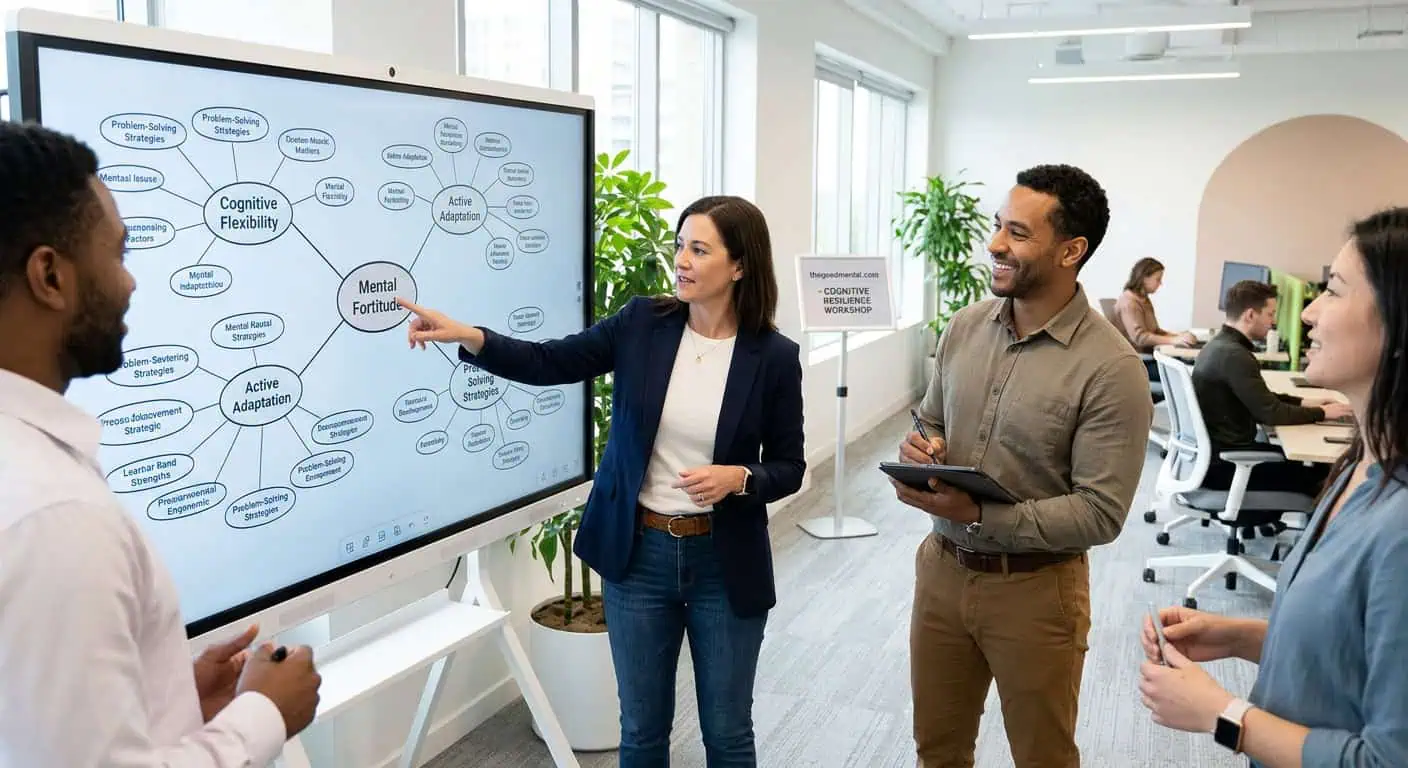
However, leading organizations are shifting focus. Instead of merely telling employees to “manage their stress,” forward-thinking companies are actively designing environments and workflows that cultivate cognitive resilience—the mental capacity to adapt, problem-solve, and maintain emotional regulation under intense or shifting conditions.
Building a cognitively resilient workforce requires moving away from the toxic cycle of constant output and implementing strategic, systemic protections for employee mental health.
1. Establishing Psychosocial Safety as a Baseline
True resilience cannot take root in an environment governed by fear or ambiguity. Organizations are realizing that psychological safety is the bedrock of cognitive flexibility. When employees feel safe to voice concerns, admit mistakes, or ask for help without fear of professional penalty, their brains expend less energy on hyper-vigilance and defense mechanisms.
Progressive companies are embedding psychological safety into daily management through transparent leadership, kind accountability, and structured check-ins that normalize off-days. Cultivating an environment where mistakes are treated as data points rather than failures naturally encourages a healthy growth mindset across teams.
2. Redesigning Workflows to Prevent Cognitive Fatigue
Cognitive overload heavily impairs focus, memory, and emotional regulation. To combat this, organizations are rethinking structural work design rather than relying on individual willpower alone:
- Focus Blocks: Implementing company-wide “no-meeting” windows or focus hours allows employees to engage in uninterrupted deep work without the strain of context-switching.
- Workload Shaping: Managers are trained to map capacity realistically, avoiding the slow creep of chronic urgency that pushes teams past functional thresholds.
- Micro-Recovery Integration: Recognizing that the brain operates on natural focus rhythms (such as 90-minute high-attention cycles), forward-thinking cultures encourage brief intervals for physical movement, hydration, and mental reset.
As explored in our deep dive on When Stress Becomes Your Normal and You’re Carrying Too Much, functioning well on paper does not mean an employee is emotionally or cognitively thriving. Rest must be structurally supported rather than viewed as a luxury earned only after burnout strikes.
3. Shifting From “Perks” to Intentional Psychosocial Practices
Generic wellness interventions often fail because they treat burnout as a symptom of poor personal time management. In contrast, robust workplace mental health frameworks focus on proactive mitigation.
Many teams are introducing practical, low-friction activities during regular working hours—such as boundary-setting commitments, collaborative problem-solving circles, and designated peer support networks. These tools directly align with broader organizational strategies designed to address psychosocial safety practices in the workplace, ensuring that teams have explicit frameworks to handle high-pressure periods without sacrificing their health.
4. Training Leaders in Empathy and Boundary Leadership
Middle managers dictate the day-to-day emotional climate of an organization. Building cognitive resilience requires training leaders to spot the early, quiet indicators of chronic fatigue—such as withdrawal, irritability, or decision fatigue—long before an employee reaches a crisis point.
Effective leaders model resilience by establishing healthy professional boundaries themselves. When managers visibly protect their off-hours, take uninterrupted time off, and communicate transparently about workload limits, they grant implicit permission for their teams to do the same.
Individual Action—Practical Micro-Recovery Habits
While organizational structure provides the safety net, individual employees need real-time tools to manage day-to-day cognitive strain. Micro-recoveries—tiny pauses lasting 1 to 5 minutes—help reset the nervous system, protect working memory, and maintain clarity without interrupting productivity.
1. The “Panoramic View” (Visual De-Focusing)
- The Mechanism: Extended screen time forces the eyes into a narrow, fixed focus, which triggers a low-grade stress response in the brain.
- The Practice: Every 30 to 45 minutes, look out a window or toward the farthest corner of the room. Soften your gaze and expand your peripheral vision for 30 to 60 seconds. This shifts the brain out of hyper-focused analytical processing and activates the parasympathetic nervous system.
2. The 3-to-1 Breathing Reset
- The Mechanism: Down-regulating physical arousal directly signals to the prefrontal cortex that you are safe, clearing mental clutter.
- The Practice: Take 3 cycles of physiological sighs: inhale deeply through the nose, take a quick secondary “top-off” inhale at the top, and slowly exhale through the mouth until your lungs are completely empty.
3. Tactical Context-Clearing (Brain Dumping)
- The Mechanism: Switching between tasks leaves “attentional residue,” cluttering working memory as thoughts from a previous project linger into the next.
- The Practice: Before transitioning between high-stakes tasks or meetings, take 90 seconds to write down where you left off, your immediate next step, and any lingering concerns. Externalizing this frees up mental bandwidth immediately.
4. Micro-Movement and Posture Inversion
- The Mechanism: Prolonged sitting restricts shallow breathing and reduces blood flow to the brain, compounding mental fatigue.
- The Practice: Stand up, stretch overhead, open your chest, or walk around your workspace for 60 seconds to boost cerebral blood flow and deliver fresh oxygen to the brain.
5. Sensory Fasting
- The Mechanism: Continuous auditory and visual inputs overload cognitive processing capacity without conscious awareness.
- The Practice: Between meetings or deep work blocks, spend 2 minutes in complete sensory stillness—eyes closed, headphones off, with no scrolling, reading, or media consumption.
Quick Micro-Recovery Blueprint
| Strategy | Duration | Best Used For |
| Panoramic View | 30–60 secs | Eye strain & continuous screen work |
| Physiological Sigh | 1 min | Acute stress spikes & mid-meeting tension |
| Tactical Context-Clear | 90 secs | Transitions between complex tasks |
| Micro-Movement | 2 mins | Mid-afternoon slumps & physical stiffness |
| Sensory Fasting | 2 mins | Resetting after intense meetings or calls |
Aligning Systemic Support with Daily Practice
Building a cognitively resilient workforce is neither a top-down mandate nor an individual burden—it is a shared commitment between an organization and its people.
When organizations create environments rooted in psychological safety and thoughtful workflow design, they provide the foundation employees need to perform at their best. When employees are empowered with simple, actionable micro-recovery habits, they gain the daily agency needed to protect their own mental energy.
Ultimately, cognitive resilience is not about enduring more stress; it is about building the capacity to recover faster and adapt more smoothly. By replacing relentless speed with sustainable rhythms, companies and individuals alike can build a culture where mental clarity, well-being, and performance thrive together.